
Welcome to IQ
Welcome to Isio’s latest quarterly pensions update for sponsors, summarising key events from the quarter and looking ahead to what’s coming up.
Change since 31 March 2025
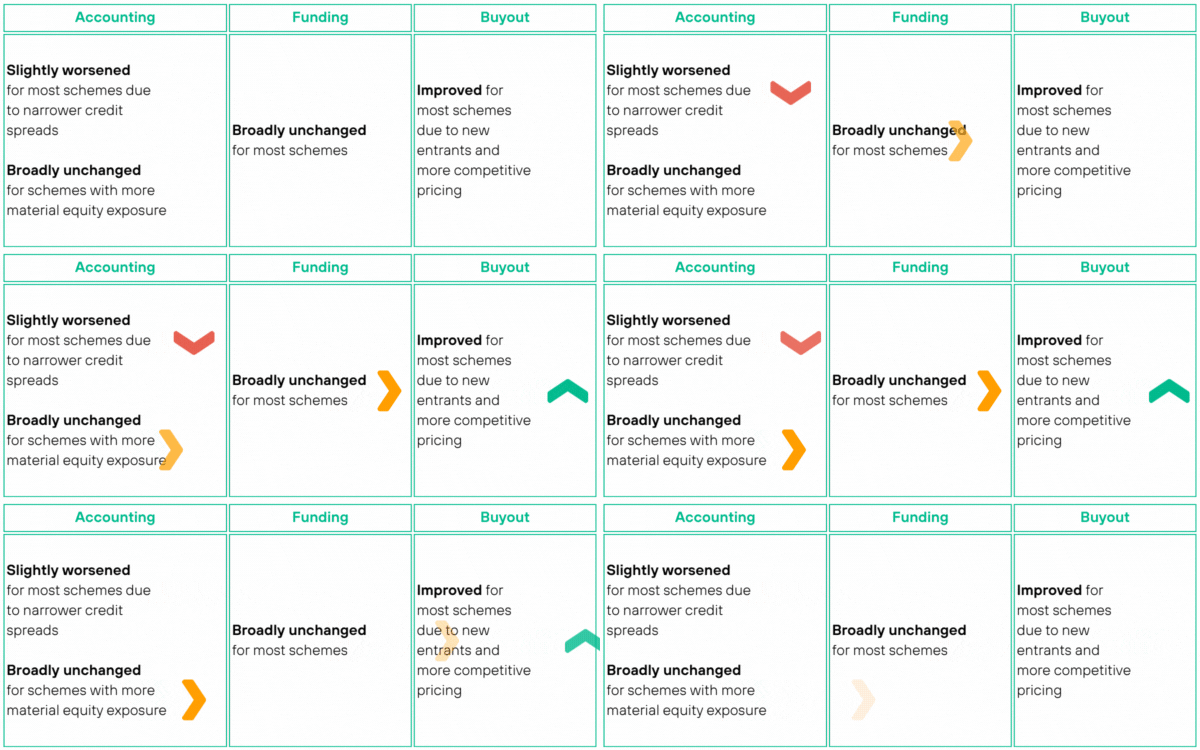
Commentary over the quarter
- Gilt yields have fallen at the shorter end of the yield curve and remained broadly flat at the longer end
- Inflation expectations have fallen more materially, by c. 30 basis points at the shorter end and c. 10 basis points at the longer end of the yield curve
- Credit spreads have narrowed by c. 6-8 basis points at most durations, thus accounting positions are likely to have worsened slightly
- Global equity markets were up by c. 5% over Q2 2025, reversing similar losses over Q1 2025
- New entrants in the insurance market are leading to more competitive pricing being observed for transactions
Background
In June, the UK Government published the Pension Schemes Bill 2025 which will impact every funded pension arrangement in the UK.
Releasing surplus to sponsors will become easier from late 2027 onwards and superfunds now have a statutory framework within which to develop. The PPF is now able to switch off levy payments. Separately, the Government is introducing legislation to help resolve uncertainties caused by the Virgin Media judgment.
Impacts on DC arrangements are covered in a separate section and more details are available in our webinar.
Isio’s view
The changes to DB surplus release rules and new Regulator guidance bring into sharp focus credible endgames such as a Purposeful Run On as an alternative to pursuing full insurance buy-out as quickly as possible. We are already seeing schemes and sponsors pause existing plans to consider their options and the potential value that can be unlocked for employers, employees and pension scheme members. We welcome these changes and look forward to the greater detail which will be published in due course.
Deciding whether to insure at the earliest opportunity or run on for surplus release over the medium to long term is a big decision. Running on could unlock material value for sponsors but this needs to be carefully weighed against downside risks.
Why it matters
Many employers and corporate boards are taking time to understand the options and pros and cons in detail and find the right strategy for their scheme – even though these reforms will take some time to implement. This is consistent with new TPR guidance. Getting an unbiased view (sometimes from a third party) and the availability of more powerful quantitative modelling can help make more informed decisions. Isio’s Karen Parker explores the opportunities available to finance leaders in respect of their DB schemes in this interview.
We also discussed the topic of surplus release with a group of senior executives from employers collectively sponsoring £50 billion of UK DB schemes. The main themes coming out of the round table are summarised here.
More details on the Pension Schemes Bill are covered in our quick response, on-demand webinar recording published in June.
Watch our Pension Schemes Bill webinarBackground
The UK’s 2025 Pension Schemes Bill introduces transformative DC market reforms, including:
- A £25bn minimum AUM threshold for providers by 2030 to drive consolidation;
- Reserve powers to mandate private market investments if voluntary Mansion House Accord pledges falter;
- Bulk transfers for contract-based schemes without member consent; and,
- Mandating default retirement options and tying reforms to a Value for Members framework, shifting focus from cost to performance.
Isio’s view
We are supportive of reforms in this space and believe consolidation can benefit many schemes and members However, in our view the £25bn minimum is unnecessary and smaller schemes can provide value too.
Private markets investing hasn’t been mandated, but we have some concern about the reserved powers. While in principle, private markets could lead to improved outcomes, poor implementation could do more harm than good.
Bulk transfers are a breakthrough for tackling legacy defaults, though independent oversight remains critical. We believe default retirement options require greater innovation beyond current market offerings to maximise the opportunity these reforms offer and make a real difference to member outcomes.
Why it matters
Consider when and how you might review your provider, what governance have in place, understand what is coming and look for the opportunities to improve outcomes for current and future employees without extra cost or risk.
In our latest interview with the Times, Richard Birkin explores the opportunities available to finance leaders in respect of their defined contribution schemes.
More details on the Pension Schemes Bill are covered in our quick response, on-demand webinar recording published in June.
Watch our Pension Schemes Bill webinarBackground
In May 2025, seventeen of the largest workplace pension providers in the UK signed a voluntary initiative, known as the Mansion House Accord, expressing their intent to invest at least 10% of their DC default funds in private markets by 2030, with 5% of the total allocated to the UK.
Isio’s view
The Mansion House Accord is another step in the right direction in encouraging DC schemes to consider investing in private market investments within their default arrangements. For too long, the market has focused on cost as opposed to value and it is exciting to see this mindset start to change.
Private markets have the ability to increase returns, allow more effective management of risk and enable sustainability to make a genuine difference. All of these are positive for members and should lead to better outcomes and more engagement.
Why it matters
There is however one potential spanner in the works. We are concerned that not enough heed is being paid to the effective implementation of private market allocations. Simply allocating does not give a guarantee of better outcomes. If it is done badly, it will likely lead to worse outcomes than what’s currently provided by existing defaults.
We would encourage all potential investors to challenge their providers, their advisers and the Government on the “how” when it comes to private markets implementation. Areas such as manager diversification, what UK investment actually looks like, speed of ramp-up, management of liquidity and the expertise of your advisor/provider can make a real difference. It’s all in the implementation!
Further insights on the DC Master Trust market
Background
Just in time for summer, the Government has announced a revived Pensions Commission to look at ways to prevent tomorrow’s pensioners being poorer than today’s. It will examine the pension system and look at what is required to build a future-proof system that is strong, fair and sustainable.
Isio’s view
We welcome the launch of the Pensions Commission and particularly its focus on inclusivity. There is a clear need to focus on ways to widen and deepen private retirement saving in the UK. The Commission will have the opportunity to weigh up the substantial body of research and evidence on savings and to give the Government a clear route to bridging the savings gap for current workers. Read our summary of the launch of the Pensions Commission as well as the review of the state pension age here.
Why It Matters
Finance leaders managing pension schemes must prepare for potential regulatory shifts addressing under-saving and inequality. We will keep you up to date as reforms progress. Isio can support firms by providing a review and identifying any challenges specific to your firm. We have seen an uptick in firms looking to address gaps through targeted support, such as financial coaching for early-career staff. Now is an ideal time to explore this as firms prepare to welcome their early-careers intake in September.
As well as launching the rebirth of the Pensions Commission, the Government has also announced the formal review of State Pension Age which will have ramifications for employers, schemes and employees in due course — read more here. As well as this, we will update you on what the Pension Schemes Bill could mean in practise for sponsors and schemes as this progresses through Parliament.
-
Change since 31 March 2025
Commentary over the quarter
- Gilt yields have fallen at the shorter end of the yield curve and remained broadly flat at the longer end
- Inflation expectations have fallen more materially, by c. 30 basis points at the shorter end and c. 10 basis points at the longer end of the yield curve
- Credit spreads have narrowed by c. 6-8 basis points at most durations, thus accounting positions are likely to have worsened slightly
- Global equity markets were up by c. 5% over Q2 2025, reversing similar losses over Q1 2025
- New entrants in the insurance market are leading to more competitive pricing being observed for transactions
-
Background
In June, the UK Government published the Pension Schemes Bill 2025 which will impact every funded pension arrangement in the UK.
Releasing surplus to sponsors will become easier from late 2027 onwards and superfunds now have a statutory framework within which to develop. The PPF is now able to switch off levy payments. Separately, the Government is introducing legislation to help resolve uncertainties caused by the Virgin Media judgment.
Impacts on DC arrangements are covered in a separate section and more details are available in our webinar.
Isio’s view
The changes to DB surplus release rules and new Regulator guidance bring into sharp focus credible endgames such as a Purposeful Run On as an alternative to pursuing full insurance buy-out as quickly as possible. We are already seeing schemes and sponsors pause existing plans to consider their options and the potential value that can be unlocked for employers, employees and pension scheme members. We welcome these changes and look forward to the greater detail which will be published in due course.Deciding whether to insure at the earliest opportunity or run on for surplus release over the medium to long term is a big decision. Running on could unlock material value for sponsors but this needs to be carefully weighed against downside risks.
Why it matters
Many employers and corporate boards are taking time to understand the options and pros and cons in detail and find the right strategy for their scheme – even though these reforms will take some time to implement. This is consistent with new TPR guidance. Getting an unbiased view (sometimes from a third party) and the availability of more powerful quantitative modelling can help make more informed decisions. Isio’s Karen Parker explores the opportunities available to finance leaders in respect of their DB schemes in this interview.
We also discussed the topic of surplus release with a group of senior executives from employers collectively sponsoring £50 billion of UK DB schemes. The main themes coming out of the round table are summarised here.
More details on the Pension Schemes Bill are covered in our quick response, on-demand webinar recording published in June.
Watch our Pension Schemes Bill webinar -
Background
The UK’s 2025 Pension Schemes Bill introduces transformative DC market reforms, including:
- A £25bn minimum AUM threshold for providers by 2030 to drive consolidation;
- Reserve powers to mandate private market investments if voluntary Mansion House Accord pledges falter;
- Bulk transfers for contract-based schemes without member consent; and,
- Mandating default retirement options and tying reforms to a Value for Members framework, shifting focus from cost to performance.
Isio’s view
We are supportive of reforms in this space and believe consolidation can benefit many schemes and members However, in our view the £25bn minimum is unnecessary and smaller schemes can provide value too.
Private markets investing hasn’t been mandated, but we have some concern about the reserved powers. While in principle, private markets could lead to improved outcomes, poor implementation could do more harm than good.
Bulk transfers are a breakthrough for tackling legacy defaults, though independent oversight remains critical. We believe default retirement options require greater innovation beyond current market offerings to maximise the opportunity these reforms offer and make a real difference to member outcomes.
Why it matters
Consider when and how you might review your provider, what governance have in place, understand what is coming and look for the opportunities to improve outcomes for current and future employees without extra cost or risk.
In our latest interview with the Times, Richard Birkin explores the opportunities available to finance leaders in respect of their defined contribution schemes.
More details on the Pension Schemes Bill are covered in our quick response, on-demand webinar recording published in June.
Watch our Pension Schemes Bill webinar -
Background
In May 2025, seventeen of the largest workplace pension providers in the UK signed a voluntary initiative, known as the Mansion House Accord, expressing their intent to invest at least 10% of their DC default funds in private markets by 2030, with 5% of the total allocated to the UK.
Isio’s view
The Mansion House Accord is another step in the right direction in encouraging DC schemes to consider investing in private market investments within their default arrangements. For too long, the market has focused on cost as opposed to value and it is exciting to see this mindset start to change.
Private markets have the ability to increase returns, allow more effective management of risk and enable sustainability to make a genuine difference. All of these are positive for members and should lead to better outcomes and more engagement.
Why it matters
There is however one potential spanner in the works. We are concerned that not enough heed is being paid to the effective implementation of private market allocations. Simply allocating does not give a guarantee of better outcomes. If it is done badly, it will likely lead to worse outcomes than what’s currently provided by existing defaults.
We would encourage all potential investors to challenge their providers, their advisers and the Government on the “how” when it comes to private markets implementation. Areas such as manager diversification, what UK investment actually looks like, speed of ramp-up, management of liquidity and the expertise of your advisor/provider can make a real difference. It’s all in the implementation!
Further insights on the DC Master Trust market -
Background
Just in time for summer, the Government has announced a revived Pensions Commission to look at ways to prevent tomorrow’s pensioners being poorer than today’s. It will examine the pension system and look at what is required to build a future-proof system that is strong, fair and sustainable.
Isio’s view
We welcome the launch of the Pensions Commission and particularly its focus on inclusivity. There is a clear need to focus on ways to widen and deepen private retirement saving in the UK. The Commission will have the opportunity to weigh up the substantial body of research and evidence on savings and to give the Government a clear route to bridging the savings gap for current workers. Read our summary of the launch of the Pensions Commission as well as the review of the state pension age here.
Why It Matters
Learn more about financial coaching
Finance leaders managing pension schemes must prepare for potential regulatory shifts addressing under-saving and inequality. We will keep you up to date as reforms progress. Isio can support firms by providing a review and identifying any challenges specific to your firm. We have seen an uptick in firms looking to address gaps through targeted support, such as financial coaching for early-career staff. Now is an ideal time to explore this as firms prepare to welcome their early-careers intake in September. -
As well as launching the rebirth of the Pensions Commission, the Government has also announced the formal review of State Pension Age which will have ramifications for employers, schemes and employees in due course — read more here. As well as this, we will update you on what the Pension Schemes Bill could mean in practise for sponsors and schemes as this progresses through Parliament.
Subscribe to IQ
Your opportunity to provide feedback on IQ
It has been one year since we launched IQ with the purpose of sharing a quarterly reflective analysis and forward look ahead. We would appreciate a couple of minutes of your time to complete this anonymous short survey to help us ensure we maximise the value of IQ for our readers.
Join our mailing list
Get the next issue of Isio Quarterly delivered straight to your inbox